
01
Use storage to protect the living zone
In a studio, the same room may support sleeping, relaxing, dining, and work. Moving infrequently used belongings out of that main zone reduces visual clutter and makes each daily activity easier. Seasonal decorations, empty luggage, archival papers, and rarely used equipment are better candidates for remote storage than items needed every week.
Before using any elevated or attic-like area, confirm that access is permitted, structurally suitable, dry, ventilated, and part of the leased apartment. Never assume an opening or utility space is resident storage.
02
Organize for safe retrieval
Use sturdy, labeled containers and group items by purpose. Keep heavier boxes low and close to the access point, preserve clearances around mechanical or electrical equipment, and avoid materials that are sensitive to heat or humidity. A simple inventory on a phone can prevent repeated searching.
Items used monthly should remain in an accessible closet or furniture-based system. High or awkward storage works best for light, durable belongings that are retrieved only a few times each year.
03
Let furniture do more than one job
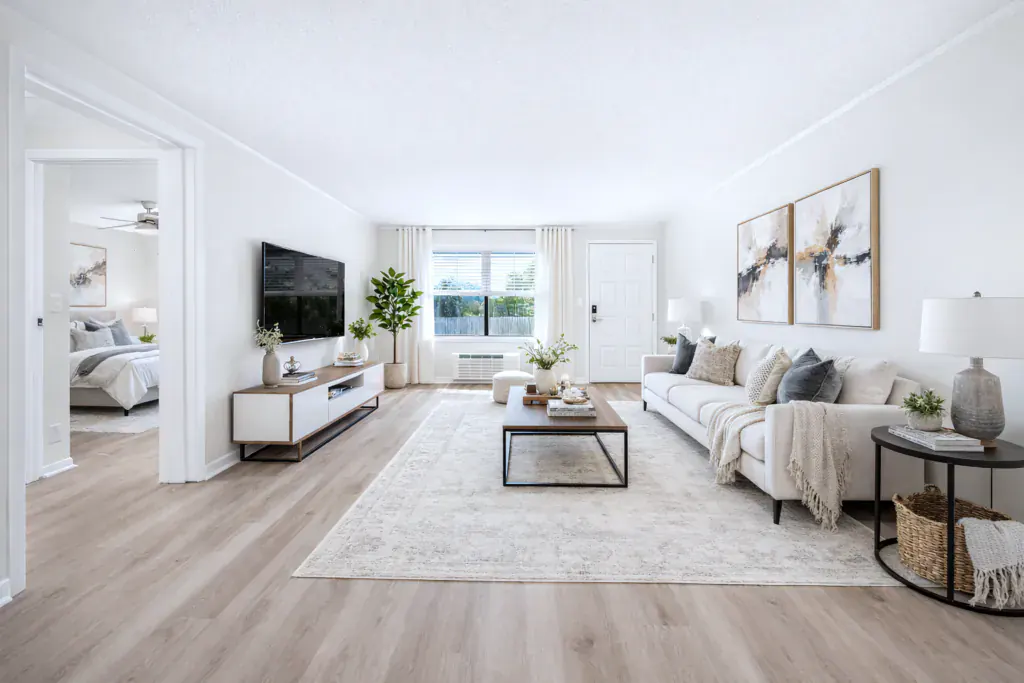
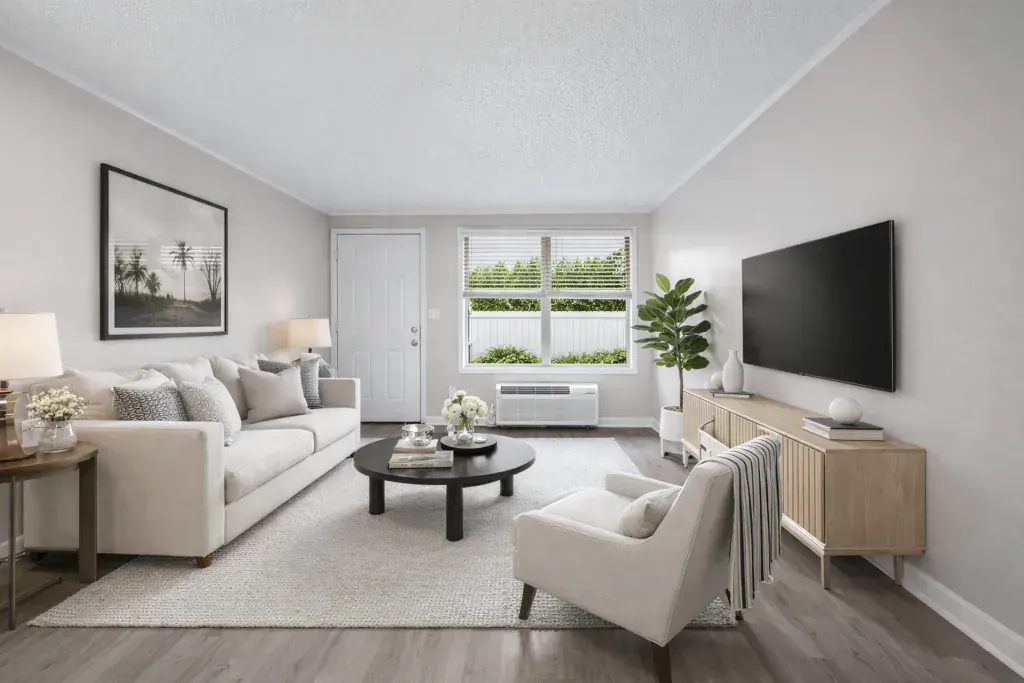
A storage bed, closed media console, slim entry cabinet, and vertical shelving can create useful capacity without crowding the floor. Baskets and doors keep the room visually calm, while a few open shelves leave room for objects that make the studio feel personal.
Older marketing associated extra upper storage with select studio homes. Confirm the feature, access method, and allowed use in the specific apartment before including it in your moving plan.